Global Positioning System
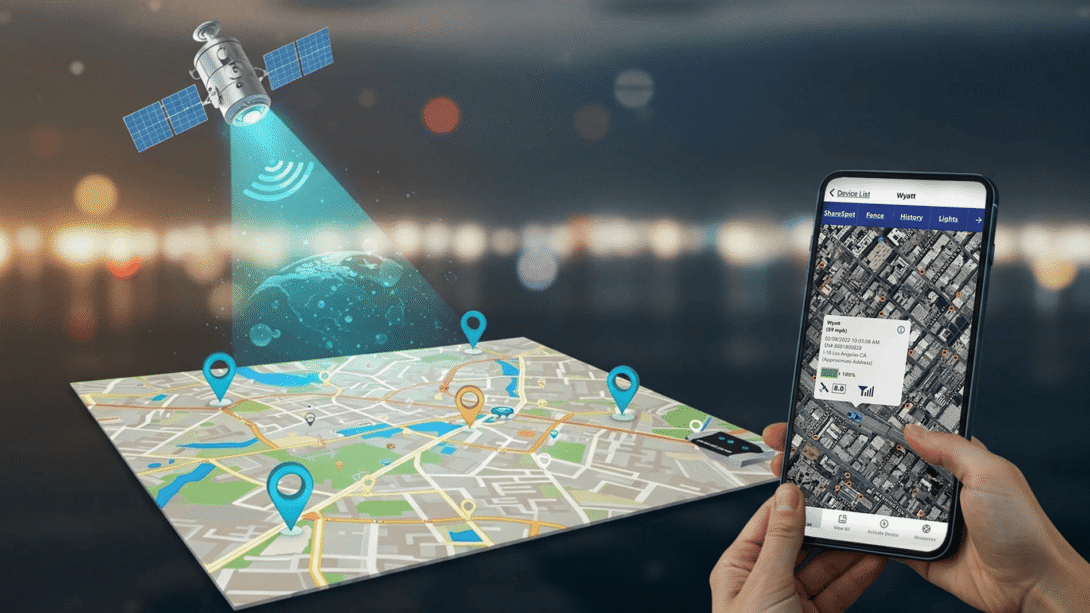
Global Positioning System is based on satellite technology, with use of multiple satellites as known positions and a receiver, the information gatherer. The distance between the satellites and the receiver combined are able to pinpoint the location of the receiver. From the same vein, the position change, or movement velocity, of the receiver can be determined through the differences of pinpointed positions. As GPS usage has become incredibly widespread, the variety of applications it may have is massive. Most commonly for positioning and navigation, this bleeds into transportation, satellite orbit determination, surveying, flight-state monitoring, and many more. Despite the ease that comes with GPS use in daily life, the fundamental processes behind understanding the system are complex, and therefore always available for improvement.
Xu, Guochang. GPS: Theory, Algorithms and Applications. Second Edition., Springer-Verlag, 2007, 1-2, doi:10.1007/978-3-540-72715-6.